
Pitt-pilling Will Continue Until The Television Landscape Improves
Was the HBO Max phenomenon able to meet last year's astronomical heights in its sophomore season?

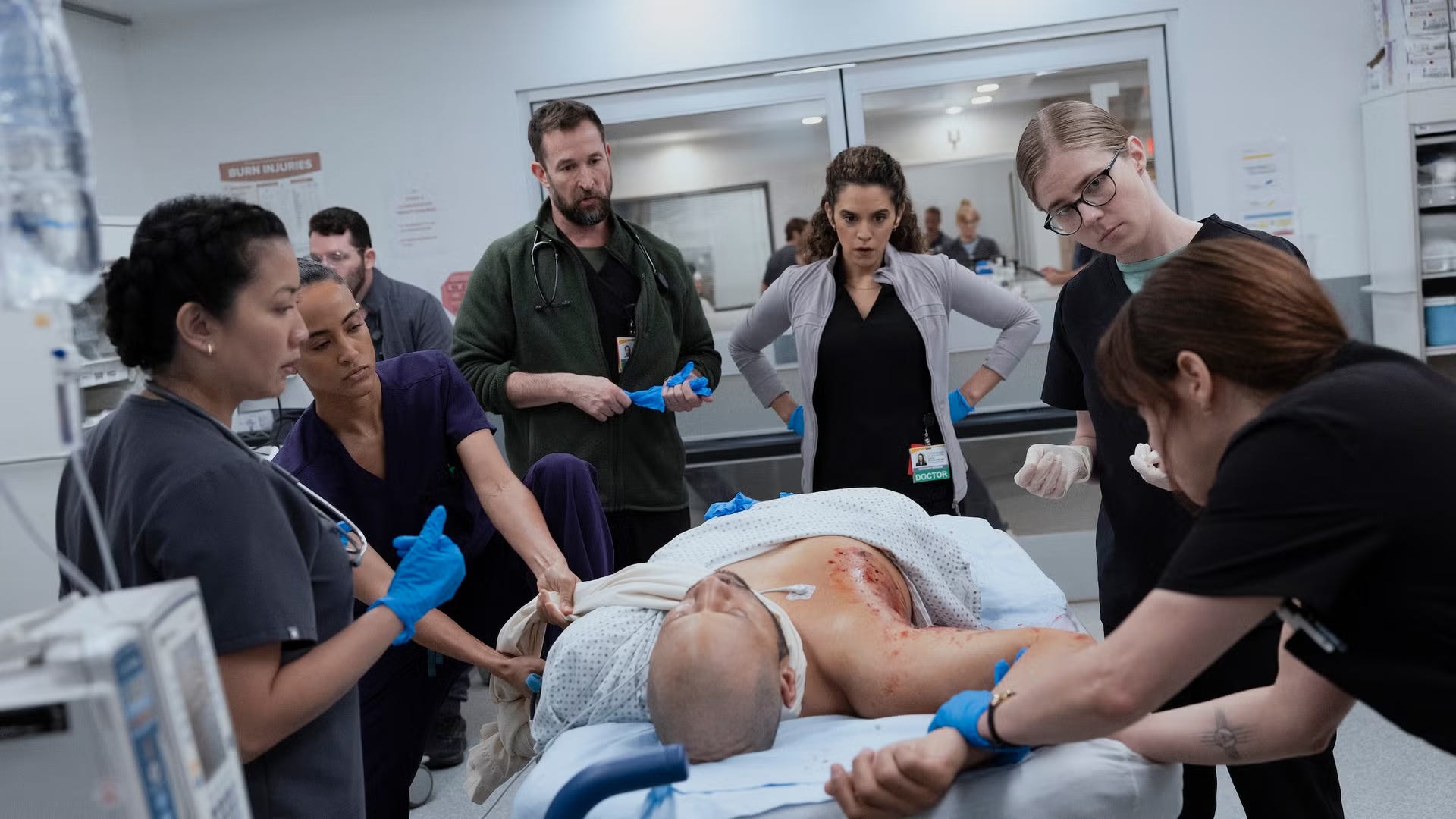
By now, you’ve seen or read about that Ben Affleck appearance on Joe Rogan’s podcast a few months ago, where he talked about the Netflix directive for creatives to repeat the plot multiple times in dialogue “because people are on their phones while watching.” (Of course, that claim was later refuted by executives.) Whether or not Affleck’s words are literally true, they certainly feel true. The way so much streaming product seems like white noise, stretched out and anodyne enough to occupy part of your attention but not enough to be truly essential, is a byproduct of that kind of mindset. And when a style becomes a prevailing trend, there’s bound to be something that comes along and serves as a rejection of it. Enter The Pitt last year, a show packed with so much incident, where glances and body language make up half of a scene. If you look away, you’re bound to miss something. Maybe people don’t just want to be mollified by screensaver television; they want to be rewarded for watching with intent.
When writing about The Pitt last year, I concluded by praying for what its success could mean. Since then, the series has only snowballed into a bigger sensation, and though its influence hasn’t been felt yet, it’s certainly in the works. It wasn’t long after season one completed that reports started coming out stating the other streamers were looking for their own version of the show, and now even HBO Max itself is trying to apply The Pitt’s formula to a cop drama. The show’s magic is owed to many different factors — a veteran showrunner seasoned in the old school model of television craft, a multi-hyphenate star hungry for another moment, a single-set location allowing for the budget to allocate towards having such a large ensemble — so who knows if its progenitors will be able to pull it off, but it’s heartening to know the attempt is being made.
All of that success and possible influence leaves the series with a ton of pressure. The worry was small but there all the same: Would The Pitt be able to re-bottle that lightning in its second season?
Thankfully, those fears were allayed pretty quickly upon its return. The Pitt is still the same show it was in season one, in occasionally negative ways, but mostly positive ones. Since this one of the best shows on TV and the rest of this post will be a lovefest, let’s get the negatives out of the way first. In the season premiere, we’re reminded of the mild limitations of the “one season = one shift” formula, as we’re forced to accept the clunky narrative convenience that we just happen to be following Dr. Robby’s final shift before a three-month sabbatical, which just so happens to be the first day Langdon returns from his stint in rehab for stealing benzos, which just so happens to be the first and only day the new attending who’s filling in for Robby is shadowing him. A traditionally structured season would be able to space those events out by days or weeks but still within the space of an episode. Here, that’s not possible. It may seem like a nitpick, but in a show that usually feels so refreshingly verité, moments of hokey TV contrivance rankle a bit more.
Whether the occasional leaden exposition and repetitive character beats that bog down earlier episodes is also a necessary evil function of the unique format is less clear. In a show so dense, maybe it seems necessary for nurse practitioner Donnie’s status as a new father to be played up constantly (“I’m a new dad, remember?” literally gets spoken the second time we hear this info in a span of a few minutes) or for Dr. Robby and Dr. Al-Hashimi to disagree on every single medical course of action in the first few episodes, but it can make for halting viewing. The show tends to exhibit those habits the worst with students and new characters. Last year, Santos suffered the most from what I dubbed “One Character Trait syndrome” for half of season one, and in season two you know you just have to power through the underlining of Ogilvie being a twerp and Joy seeming apathetic about everything before their eventual shading.
In other areas, season two straightens out aspects where its predecessor was still finding the right calibration, particularly in its political bent. Season one was already pretty incredible at using the emergency room as a nexus point for all areas of humanity, but there were a few times where it felt like the show was turning to the audience and reciting facts about violence against nurses or some other bugaboo. This was especially prevalent whenever the hospital’s chief medical officer Gloria would pop up, which the writers seemed to be aware of, as she was excised from the second season. The closest we get to fourth wall breaking levels of libbing out is Robby’s episode 11 rant to the ICE agents causing a distraction in the ED, but that moment works because it’s braided into his crumbling headspace and hair trigger impatience at that point in the season. The way our country’s anti-immigration crisis is handled this year, first quietly with the Haitian American woman who must take care of her brother in the wake of their parents’ deportation, then more bombastically with ICE agents bringing an injured detainee in, make for some of the most vital material of season two. That they stare down tough issues with grace and conviction is one of the qualities that makes it so compelling.
Being a medical drama, naturally the political deficiency that gets the biggest focus is the bleak state of the American healthcare system. It pops in ways both big and small: the closure of a hospital causing patients to have to drive further to receive care from PTMC, Mohan’s study from season one getting axed by the current administration, multiple mentions of Medicare cuts and storylines of patients struggling with being uninsured. There’s a broad financial anxiety humming underneath so many of these stories, only giving them more urgency.
We see the effects of our broken system in more abstract ways too. In episode nine, a patient with PCOS, whose pain frequently leaves her in and out of the doctor’s office, comes in and is treated by Whitaker and McKay. The need to constantly free up beds is ambiently chiseled into everyone’s brains, so Whitaker just wants to prescribe her medicine to manage the pain and release her. But McKay posits that his course of action is probably the same thing dozens of doctors before them have done to her, and suggests keeping her for monitoring for a few more hours, which leads to a proper diagnosis. It’s such a smart depiction of the way optimal care often stands in direct contrast with the optimal productivity that the hospital requires, and it can affect even the most well-meaning physicians.
As ever, the show is packed with compelling medical cases, and making a sociopolitical point is only one of the three main purposes they serve. Another category of cases are those that exist to give one of our main characters a little more texture and backstory, like the elderly Jewish patient and survivor of the Tree of Life synagogue shooting who Robby treats and connects with over their shared identity. All around, the writers are smart about pairing doctors with cases that will maximize storytelling potency. And then sometimes, a case exists simply to be absorbing all on its own. An early wonder in that regard is Dr. McKay’s patient who comes in, begins acting erratically, and is eventually diagnosed with a brain tumor. His ex-wife who has remarried and hasn’t seen him in years is still his emergency contact, and the scene where she comes to visit him is so soft and emotional. There’s this unspoken flash of emotions that wash over her face when she realizes that the tumor could’ve been the cause of why things turned sour in their marriage, and the gears turning on how things could’ve been different had they known, is heartbreaking.
But the best story we get by far is the sexual assault case that stretches over episodes seven and eight, the exact middle of the season. It’s a brilliant imagining of The Pitt’s real-time structure, as the fact that the examination Dana and Emma conduct on the victim stretches out over two full hours puts you in her point-of-view and emphasizes the agony of the process. The exam is peppered in every three or four scenes, and every time the episode returns to it from regular hospital business, you feel the weight and time of it. The whole storyline is done with impeccable grace, without ever reveling in the nudity of the inspection or the gory details of the actual assault.
The show’s bench was already Deadwood or Orange is the New Black-level deep, but the world of The Pitt only got more full this time around. One advantage of a season taking place over one day is that it allows for organic cast swaps, where a character can be “off for the day,” like the social worker from the first season, which gives us a chance to meet another social worker at the hospital. There are also little additions to the recurring cast like the case manager who has some kind of romantic entanglement with Dr. Robby, the emergency psychiatrist, the clinical pharmacist, and various hospital runners; all giving us little peeks into new corners of functionality at PTMC. And the fact that the show brings back some of the tiniest bit players — the cop who arrests Mel’s thief patient being the same one who flirted with Dr. Collins last year, many of the same ambulance drivers, the tertiary nurses that are there to fill scenes — only makes it feel more alive. It’s not enough that it’s the best show out right now, it’s also keeping half of Los Angeles employed.
Of course, you can’t talk about expansion without the season’s most significant addition in the form of Dr. Baran Al-Hashimi. She was my biggest worry at the start, not only because of the choice to have her diametrically opposed to Dr. Robby on every single decision with little variation, but also because she felt like a classic example of a one-season obstacle that gets dispensed with in order to reset the status quo. But in classic Pitt fashion, she does get to show more colors. Dr. Al-Hashimi is a confident woman who speaks her mind and isn’t afraid to assert herself, even in an unfamiliar environment, and I like that the show implies that while some of her frustration with Robby does come from her concern about the way he does things, a part of it also comes from her not liking being the one in control. That they go from clashing over firsthand experience vs. textbook knowledge and gut instinct vs. analytics to an eventual (temporary) understanding of each other in a way that feels organic is a testament to the precise work they do with her character over the course of the season. It’s a relief to know she’s returning next season and isn’t just a one-and-done character.
Speaking of worries and relief, even though the mass casualty event last year was excellent, when you unleash a mini-arc like that in your first season, it’s easy to give into the temptation of chasing that high or attempting to up the ante. At first, the cyberattack and blackout angle appear to be a lame attempt at doing just that. In execution, that plot development, as well as the waterpark accident that provides the cliffhanger of a later episode, are merely fake outs gesturing at a big climactic crisis before going a different route. It’s a great choice that this just happens to be a very busy day, one where all of these events are little bits of pressure that accumulate and add to the general stress level of the shift. It’s a slow burn that wears everyone down.
If season one of The Pitt was about introducing you to this world and what these people do at this place, then season two is about what this place does to these people. The physical and mental toll that working in the Emergency Department takes on the characters is the primary theme of the season, which becomes increasingly obvious as everyone gets more frayed as the season trudges on. “Why do you do this?” is a question that gets asked of many of the characters, either implicitly or directly. For Whitaker, it’s because he likes to be there for people on the worse days of their lives; for Dana, it’s because of moments like the sexual assault victim saying “I’m glad you were here today”; but for everyone, the job asks so much of you that coming back again and again starts to feel like a sickness.
“It’s not for everyone,” Robby says at one point about the workload of the job. “I’m not sure it’s healthy for anyone,” responds Ogilvie, and he’s a pest but he might be right. When you regularly have to stay a few hours after your shift ends to get all of your work done, you miss dates, you can’t cry anymore because of everything you’ve experienced on the job, and you’re forced by your boss to help perform a dangerous surgery when you’re mentally fried; that’s a toxic workplace, even if you’re saving lives. Everybody looks dead by the end of the season, all baggy eyes and mussed hair. Joy is the only one who has the right idea: quoting burnout rates for emergency medicine and getting the hell out of there exactly when her shift is over.
There’s no embodiment of the “what this place does to you” theme more apt than Dr. Robby. On a series that pointedly does not show these people’s lives outside of the hospital, he’s the only one who feels like he ceases to exist when he leaves its perimeter. He is the ED, the ED is him, and it’s clear that this is untenable. What seemed accidental at first was actually intentional — from the very first shot of him riding his motorcycle too fast while not wearing a helmet, he’s shown to be a man with a bit of a death wish. From there follows a 15-hour unraveling, going cowboy with medical cases, making resigned comments about patients like “sometimes death is the best option,” and attacking his subordinates in front of everyone. He says he’s ready to go on his sabbatical, but he keeps creating all of these reasons for himself of why he has to stay, less because the place needs him and more because he needs it. It’s the only thing distracting him long enough to not fall apart. But even that’s not working, as we see all season. It’s an addiction of sorts. I’ve read some complaints about season two reorientating the show too much around Robby’s orbit and taking him too far, though I’m not sure I’d agree. One of the great things about the first season was its willingness to depict Robby as a flawed leader, and this just feels like an evolution of that ethos.
Dr. Robby’s arc is also where the season gets in some of its most literary writing. I love the way multiple characters make entreaties to get through to him — Dana, Caleb the emergency psychiatrist, McKay, Duke — and they all do it twice, with the second time coming with more urgency around episodes 13 and 14. And it’s an elegant bit of symbolism that the three regulars he’s the hardest on this shift are the ones who exhibit the most obvious reflections of himself: Mohan (his season one panic attack), Dana (his PTSD), and Langdon (his fallibility).
If Robby’s arc was the dark soul of the season, Dr. Langdon’s felt like an inverse — pure lightness, and one of most thoughtful and moving character threads. There aren’t enough plaudits for Patrick Ball’s performance here; he brings an at-peace energy to Langdon that gives off the impression of someone who’s faced down his demons and done the work. You can see that early on with his progression of amends, starting with Louie and moving closer to the center, going from patient to colleague when he also apologizes to Mel. And the second-guessing of his own abilities upon returning only makes his triumph in performing a dangerous closed joint reduction all the more powerful. It’s a terrific cresting of the season long arc between him and Robby, where the latter has to put his faith in the former after shunning him all shift, and Langdon rises to the occasion. He even lands a “good job.”
It’s not just Robby and Langdon either, there was wonderful character work being done all across the show’s massive ensemble. One improvement made in season two is that it found more space for moments where characters talked to each other about things that weren’t strictly patient cases. Season one prioritized learning about the doctors and nurses through the work that they do, and that still exists (see again: the perfect matching of cases that suit a character’s personality and personal history) but we also learn more about them between the work. There were many great little character pairings found this year, from Donnie and Langdon bonding over fatherhood during their triage work to Mel and Mohan taking cases together when you didn’t see much of that before. Hell, just one scene between Mohan and Abbot was enough to drive the shippers wild. And later, a pairing like McKay and Santos on a case provides an economical expression of the different way they view their duties as healthcare providers. The cast is so wide and varied that they can let the permutations rock and get gold every time.
The characters and medical emergencies they encounter are so fun to watch that it’s easy to overlook all the little style elements of the show that contribute to its quality. Take the openness of the set and the way it allows for a free flow of movement, for example. It makes it so that scenes rarely start and end the way they do in most shows, with a conventional break. Instead they’re almost always bleeding into each other, the end of one daisy chaining into the start of another, giving episodes a subtle feeling of higher momentum. That wouldn’t be possible without the show’s masterful direction either, which moves through complicated camera and blocking setups with ease. Even the hair and makeup work is excellent, tracking the day by making everyone’s hair get a little more unkempt, the circles around their eyes a little darker.
There’s such an economy to the writing in all areas, where they can make a character pop in mere moments (Mark the Shark!). There’s also an elegance to the way they teach the viewer through senior characters teaching those lower on the totem pole. It allows them to hide foreshadowing in smart ways, like when Dana tells Emma about the “hula hoop” safeword at the beginning of her shift — that seems like standard onboarding in the moment, but it actually does come into play later. And when you rewatch the show in a short span for the purpose of writing about it, you begin to notice all the intricate storytelling Jenga that they’re pulling off with the way everything fits together logistically and narratively.
Nothing flexes The Pitt’s economy and quiet restraint more than the way it deploys its night shift crew though. Having a whole set of characters that you can slot in when the energy is flagging with the main staff is one the most genius constructions of the show. When they start rolling in around episode 13, there’s a palpable electricity, and even newcomers like intern Nazely and Dr. Crus “Crus Control” Henderson have a spark immediately. I’m not sure I’ve ever seen a show with an element that functions quite like the night shift does here.
So yes, The Pitt is still good, but the ways in which it’s good remain very reassuring. After the success of season one, it would be easy to try to tap bigger guest stars to appear as patients, but they know that everyone who comes into the hospital feeling like a real person off of the street adds to the experience. With how much everyone loves the night crew, it would be just as easy to pitch a spinoff show, or give them more screentime. The creatives understand the right balance there as well. It’s clear we're in good hands here. There are no worries for season three like I had in the back of my mind before season two. I fear this Pitt-pilled diagnosis may be terminal.